
Information security training enables employees to recognize risks, protect information, and know when to report or verify.
Information security is more than IT security. It includes data, access, communication, rooms, documents, and decisions.
That is why employees belong at the center of every security strategy. People who understand why rules exist apply them more reliably.
Why employees need training

Cyberattacks, data leaks, and fraud attempts often become possible through human decisions. That does not mean people are the problem. It means they need support, routines, and clear reporting channels.
Information security training reduces risk by explaining everyday situations: Which information is sensitive? Which request is unusual? When is reporting the right step?
Good reasons for training
- Reduce error risk: Participants recognize phishing, vishing, tailgating, and baiting earlier.
- Build awareness: Employees understand how protective measures work in daily life.
- Customize content: Policies, roles, and industry-specific risks are included.
- Strengthen culture: Teams learn to report suspicious situations openly and early.
Interactive training instead of another PDF

Training with live moderation, gamification, and realistic scenarios is stronger than slides or PDF documents alone. It creates attention and makes abstract risks tangible.
Employees experience how attacks are built, how pressure arises, and which verification steps help. This makes the knowledge easier to recall.
Content of information security training
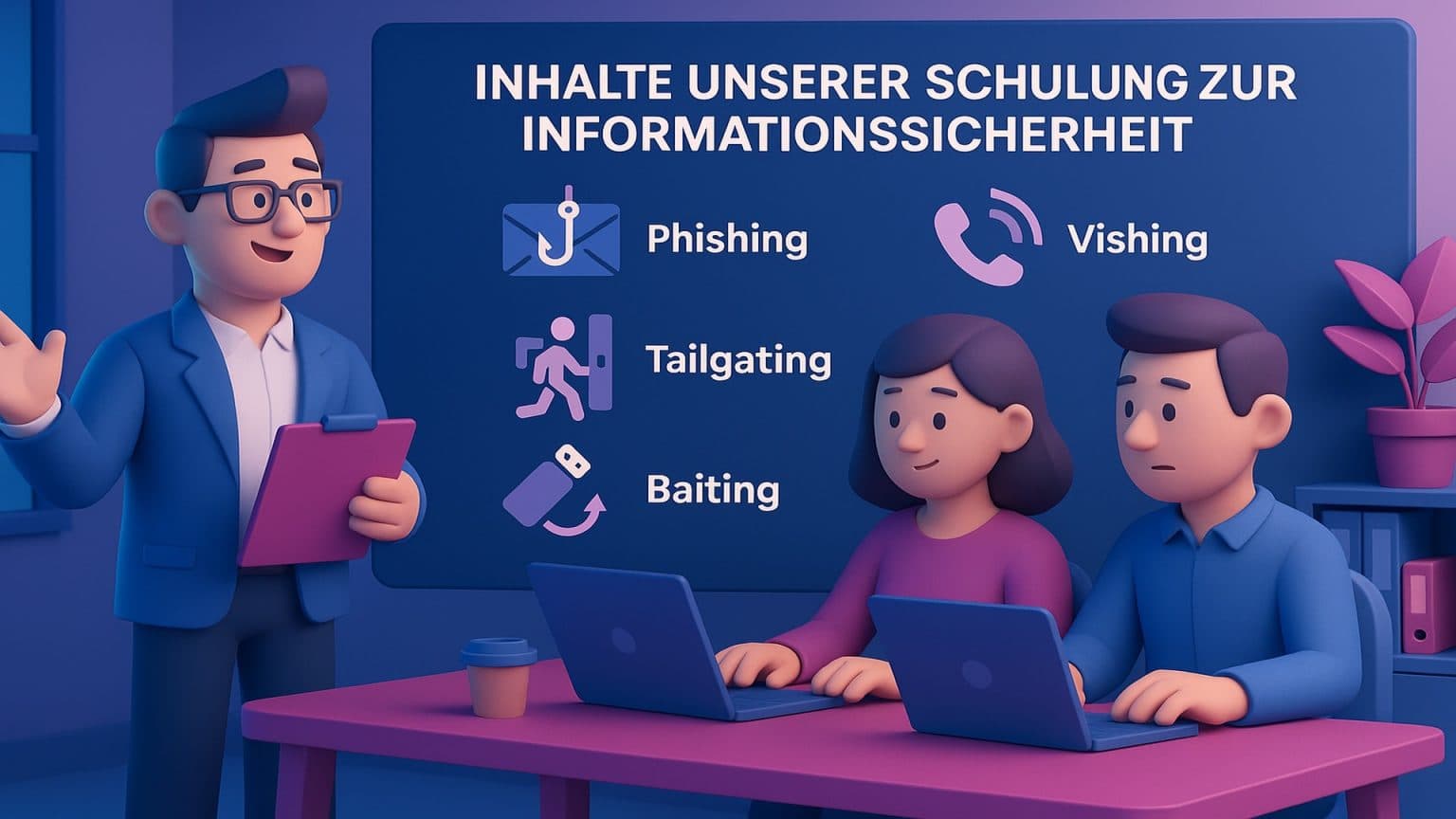
- Phishing: Recognize deceptive emails, messages, and links.
- Vishing: Check phone fraud and pressure situations.
- Tailgating: Prevent unauthorized access and follow visitor processes.
- Baiting: Assess USB sticks, downloads, and other lures critically.
- Password security: Use passwords, MFA, password managers, and passkeys correctly.
- AI and deepfakes: Recognize manipulated audio and video content.
Formats: online training and learning journey
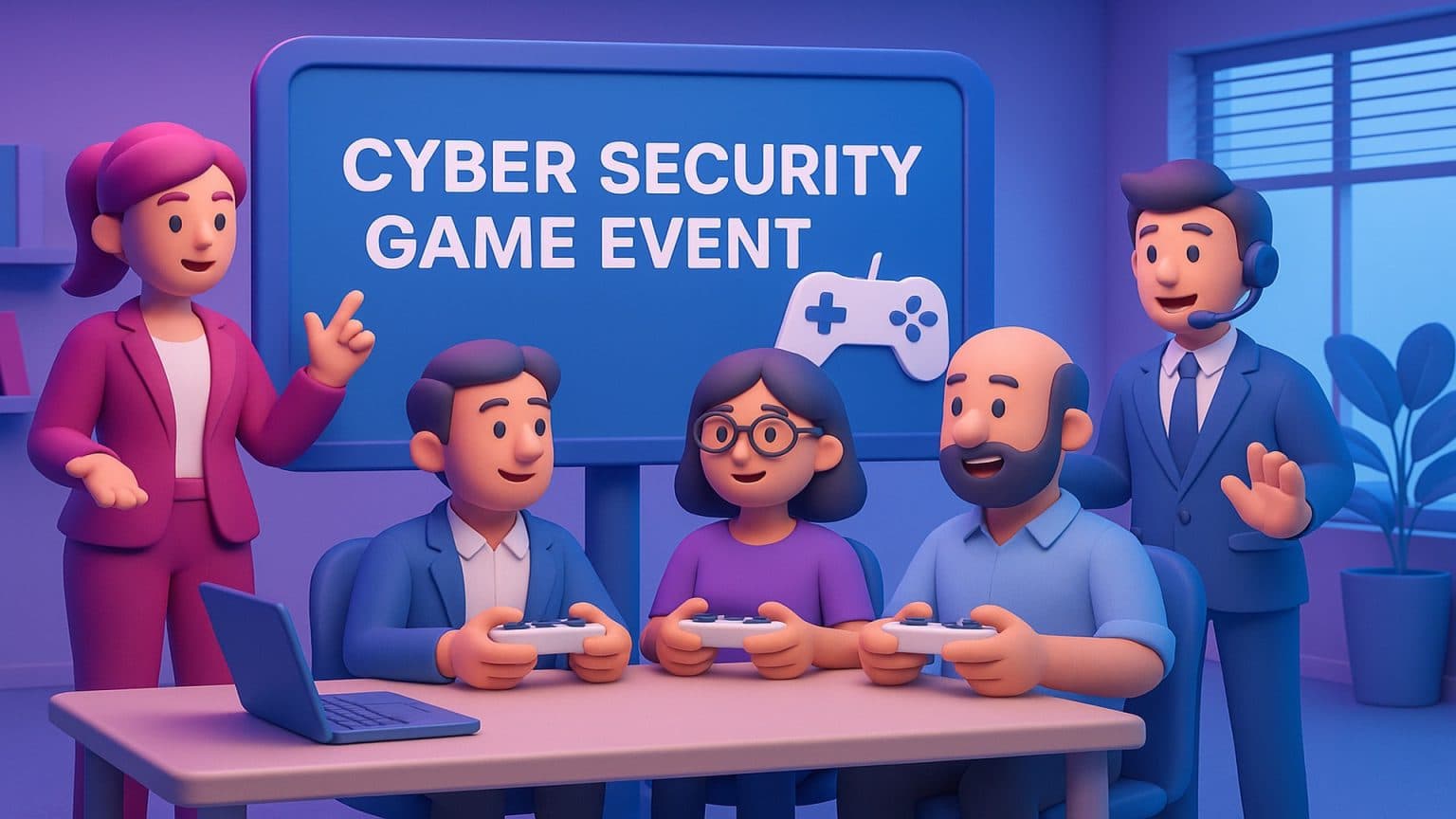
Security Game Event
A compact online training combines live moderation and serious game. Participants apply knowledge directly and experience secure decisions in realistic attack scenarios.
Learning Journey Campaign
Regular short Cyber Snacks keep information security present over time. This strengthens repetition, relevance, and transfer.
What should stick after training

- Multi-factor authentication: MFA prevents a stolen password from being enough for access.
- Physical security: Employees check entry, visitor badges, and unusual situations.
- Central reporting point: Suspicious situations are reported early so IT and security teams can react.
Information security works when employees know the rules and understand the reason behind them.
Conclusion: information security is teamwork
Information security training turns employees into active security factors.
It reduces risk, supports compliance, and creates a culture where verifying and reporting become normal.