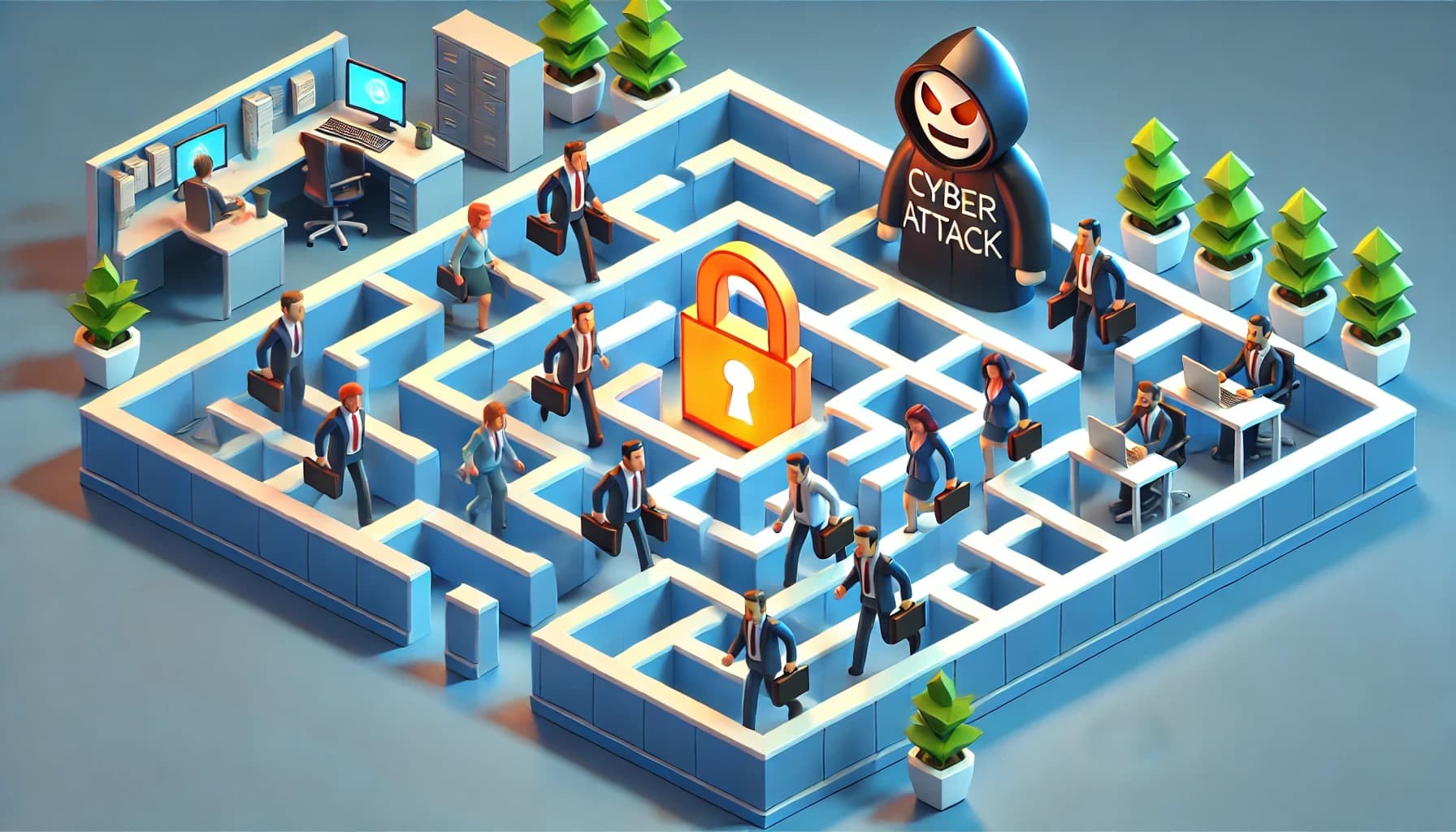
Cyber security training courses enable employees to recognize digital threats, defend against attacks, and make secure everyday decisions.
Many courses formally satisfy a requirement. They become valuable when employees act more securely afterward.
That takes clear content, realistic scenarios, interaction, and a connection to the organization's concrete risks.
What is a cyber security training course?

A cyber security training course provides practical knowledge about digital threats and secure behavior. Social engineering is often central because it exploits human routines and weaknesses.
The course should not only explain what is dangerous. It should show how to recognize attacks and what to do when something feels off.
Why is it so important?

Cyberattacks can threaten an organization's existence. Without trained teams, even strong technical safeguards remain vulnerable.
Well-trained employees recognize threats faster, ask questions, and report incidents early. This reduces the risk that an attack escalates unnoticed.
Key benefits

- Reduce mistakes: Participants recognize phishing, tailgating, baiting, and similar attacks earlier.
- Increase competence: Teams learn to protect information and access deliberately.
- Tailor content: Training reflects policies, roles, and real company workflows.
- Create lasting learning: Serious games and live moderation improve motivation and memory.
- Strengthen culture: Teams develop a shared understanding of security.
Typical learning content
A good course covers the most important attack patterns and makes them understandable through examples from daily work.
- Phishing: Recognize fraudulent emails and messages.
- Vishing: Verify phone-based manipulation and false identities.
- Tailgating: Prevent unauthorized physical access.
- Baiting: Avoid digital and physical lures.
- Password security: Use passwords, MFA, and passkeys safely.
- Deepfakes and AI: Assess new forms of deception critically.
Formats: Security Game Event and learning journey
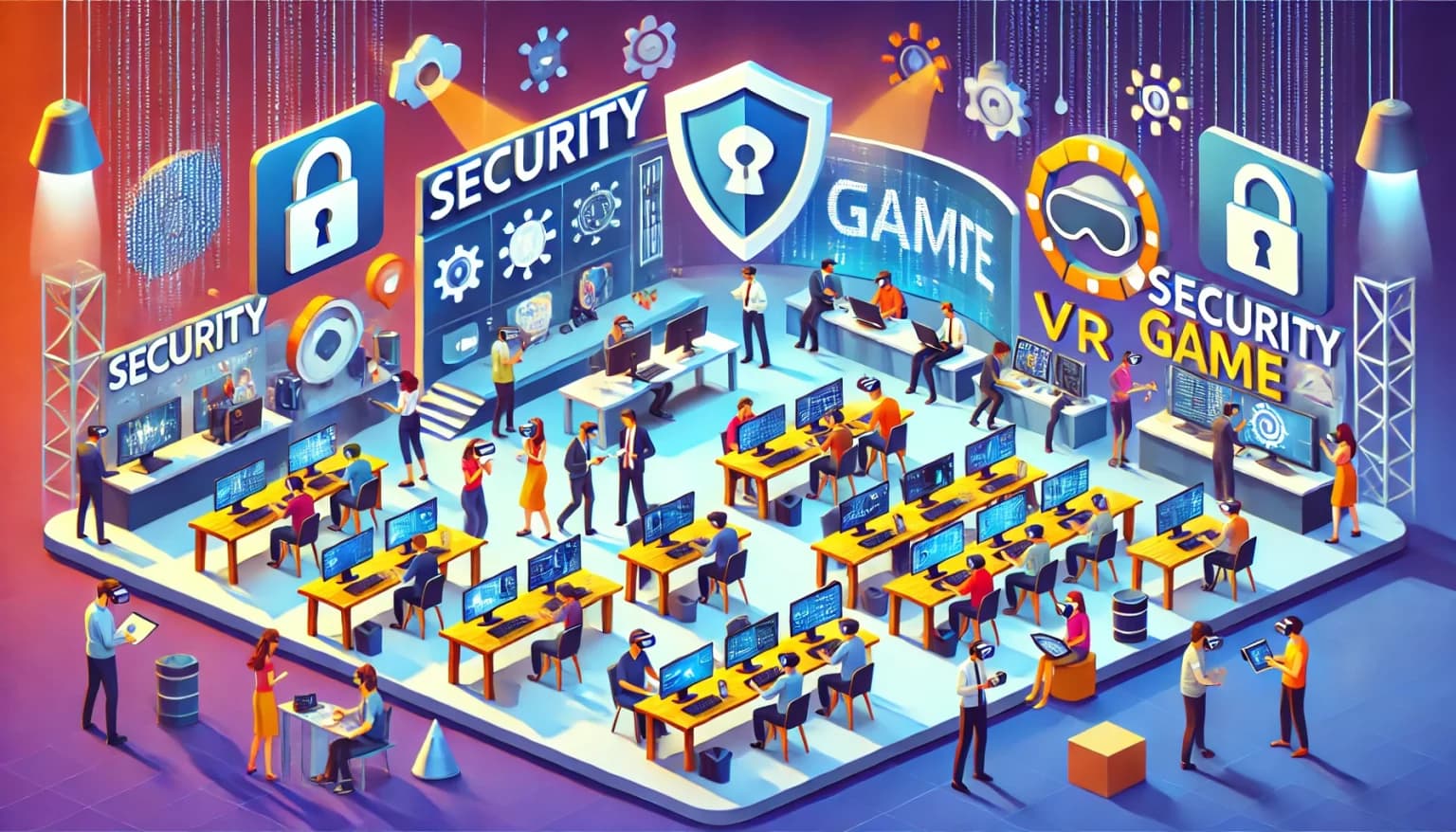
Cyber Security Game Event
A Security Game Event combines live moderation with a serious game. Employees apply knowledge directly, make mistakes without risk, and learn from them.
The result is training with high entertainment value and a clear security purpose.
Learning Journey Campaign
A learning journey complements events with recurring short impulses. Cybersecurity remains present over time instead of being addressed once a year.
Audience, feedback, and requirements

Cyber security training is relevant for all employees, especially teams that handle sensitive information, external contacts, or approvals.
Participation is simple: online formats usually need a laptop or tablet, internet connection, browser, and web meeting software. Technical support keeps the barrier low.
Cyber security training is good when it does not lecture people, but helps them decide more securely.
Conclusion: the most important training is the one that works
Cyber security training is one of the most effective ways to reduce digital risk in an organization.
The difference lies in the format: the more practical, interactive, and relevant the training is, the more it changes behavior.