
Protection against social engineering is not about making people distrustful. It is about clear decisions, secure processes, and a culture where asking is normal.
Manipulation works best where processes are unclear or employees feel they must decide alone.
Effective protection creates certainty: what needs to be checked, who can approve exceptions, and where should a suspicion be reported?
What exactly needs protection?

Social engineering can affect credentials, customer data, financial processes, internal information, or physical security areas.
Protection measures should therefore not look only at IT. Interfaces between people, systems, and decisions are especially important.
Understand the psychological levers

Attackers use authority, sympathy, fear, curiosity, helpfulness, and time pressure. These levers are not unusual; they are part of normal communication.
That is why warning employees about bad intentions is not enough. They need to recognize concrete patterns in everyday work.
Practical protection measures

- Regular awareness training: Training should use realistic situations and not only test knowledge.
- Clear guidelines: Payments, data sharing, and support requests need understandable approval routes.
- Technical baseline security: MFA, password managers, email protection, and access concepts significantly reduce risk.
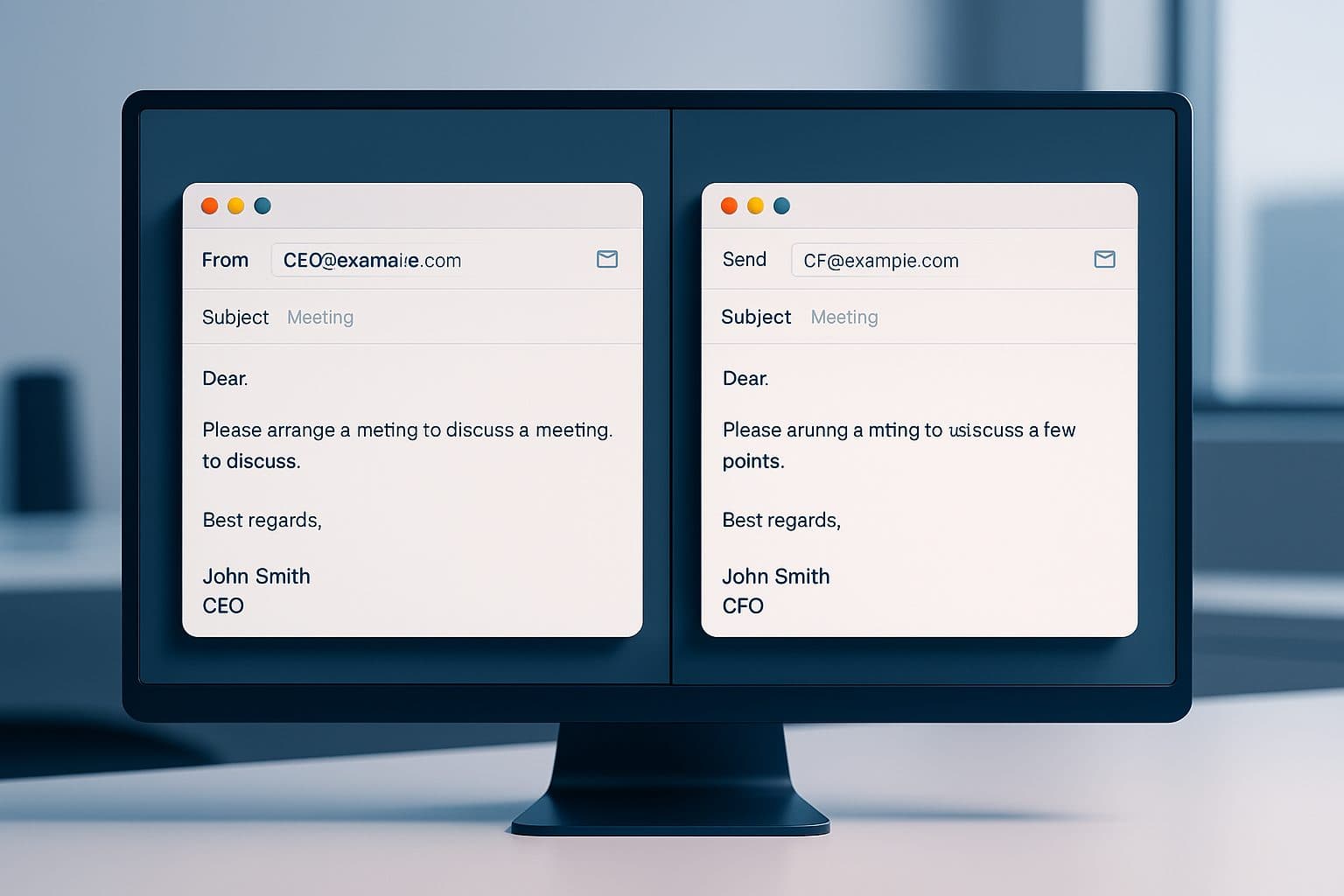
- Culture of caution: Asking back must be welcome, even when the request appears to come from the top.
Take warning signs seriously

Requests are suspicious when they are unusually urgent, demand secrecy, bypass processes, or use private channels.
A gut feeling also matters. Employees should know that they may stop when uncertain without needing to justify themselves.
What to do if something feels wrong
- Do not click further: Do not reopen links, attachments, or QR codes.
- Preserve evidence: Do not delete messages, senders, phone numbers, or screenshots.
- Report immediately: Inform IT, security, or defined reporting channels quickly.
- Avoid blame: Fast reporting must be valued, otherwise incidents remain hidden.
A sustainable strategy

One training session is not enough. Attacks change, teams change, and new tools create new habits.
Sustainable protection combines recurring awareness impulses, clear processes, technical standards, and regular exercises.
Conclusion
Social engineering protection is strong when people are not left alone. They need good technology, clear rules, and permission to pause.
That turns uncertainty from a weakness into an early warning system for the whole organization.