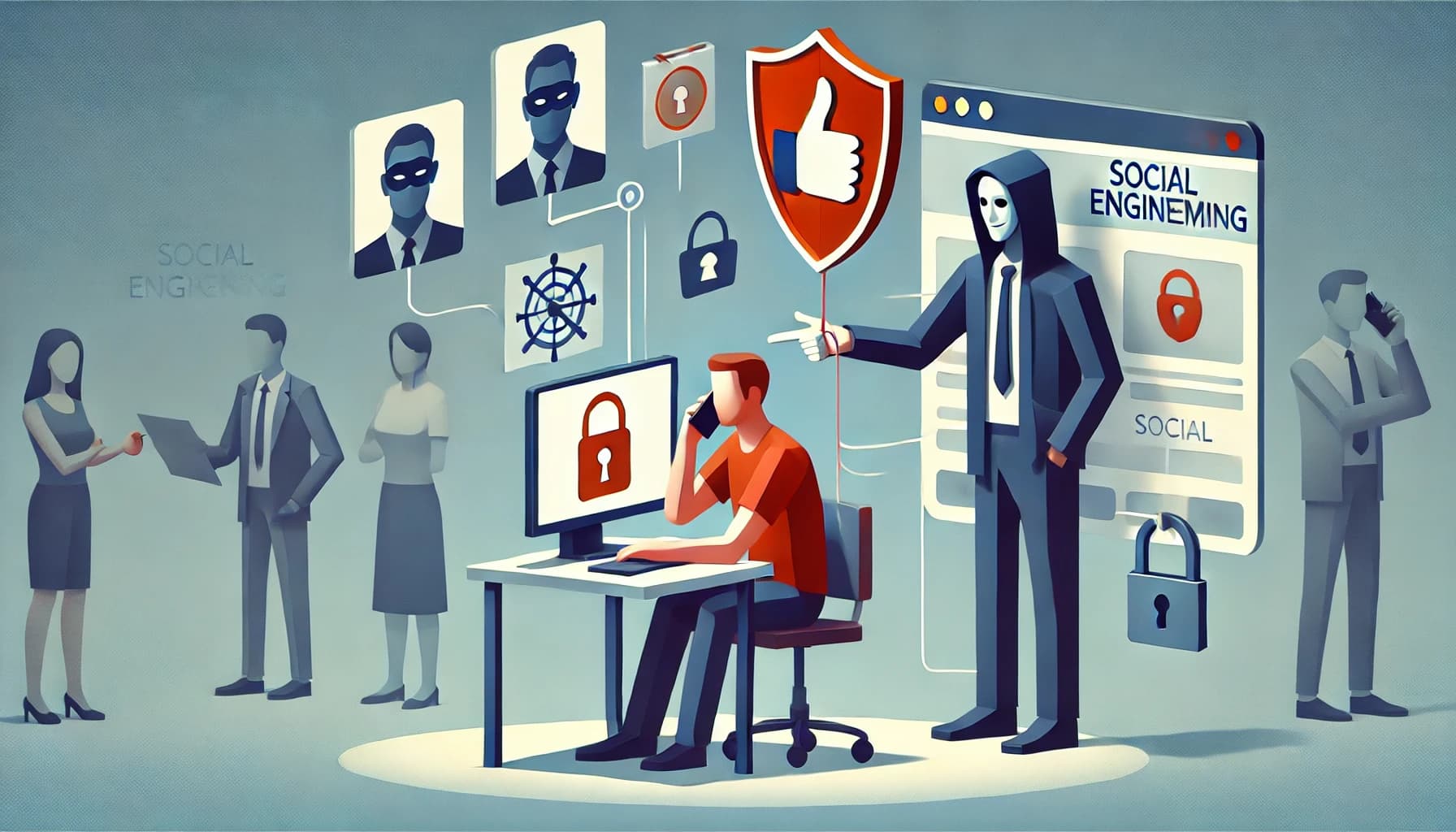
Social engineering is fascinating and dangerous because it does not work against our thinking, but with it. Attackers use mental shortcuts that usually help us in everyday life.
People make quick decisions all the time. We trust authority, react to urgency, help others, and notice only part of our environment.
These mechanisms make us capable of action. In the hands of an attacker, they become an attack surface.
The psychology of manipulation

The art of social engineering is to shape a situation so the desired action feels logical. The target should not think: I am being attacked. They should think: this is my task right now.
Attackers use psychological principles that work reliably in everyday life.
- Authority: Instructions from seemingly legitimate sources are questioned less often.
- Urgency: Time pressure reduces critical thinking.
- Liking: Friendly, similar, or familiar people receive support more easily.
- Helpfulness: The wish to help is redirected into risky action.
Typical attack techniques

- Phishing and spear phishing: Messages imitate familiar senders and lead to manipulated destinations.
- Vishing: Phone calls create closeness, pressure, and the ability to handle objections immediately.
- Password manipulation: Attackers use habits, reuse, and false offers of help.
- Tailgating: Courtesy and physical proximity replace access control.
- Baiting: Curiosity or the expectation of a reward becomes the lure.
Why smart people are affected
Social engineering has little to do with stupidity. It exploits situations in which people are busy, helpful, stressed, or focused on a task.
High-performing teams can be especially vulnerable when they value speed, service orientation, and ownership, but lack a clear pause routine.
Protection starts in the mind, but does not end there
Awareness is the beginning, not the end. People who recognize manipulation need clear processes and technical support afterwards.
Good protection measures make the secure action easier than the risky exception.
- Think before you click: Pause briefly before links, attachments, QR codes, and approvals.
- Verify unusual requests: Use a second channel, especially for money, data, or access.
- Strengthen password security: Password managers, MFA, and passkeys reduce attack surface.
- Think of reporting positively: Reporting is not an admission of failure, but teamwork.
Social engineering works not because people are weak, but because people are human.
Conclusion
The psychology behind social engineering shows why warnings alone fade quickly. People need to experience manipulation, classify it, and practice secure alternatives.
That turns the attackers' dark art into bright, practical knowledge inside the team.