
Many awareness measures suffer from the same old problem: they are correct, important, and unfortunately often about as exciting as an operating manual for a shredder.
That is exactly why the approach of our Cyber Snack is so interesting. Instead of overwhelming employees with rules, it stages the topic as a Cyber Security Game Show: with four categories, points, medals, and a trophy at the end.

At the center are four deliberately everyday topics: social engineering, social media, passwords, and malware.
Why playful awareness works better
The real point is not the show effect. The point is that employees are not merely told about risks; they have to recognize, compare, and classify them themselves. That is what sticks.
For CISOs and awareness managers, this is more than a question of style. The Verizon DBIR 2025 shows that the human factor still plays a role in around 60 percent of all security breaches, and that social engineering attacks remain a central problem. Anyone who wants to make awareness effective must therefore train not only knowledge, but judgment.
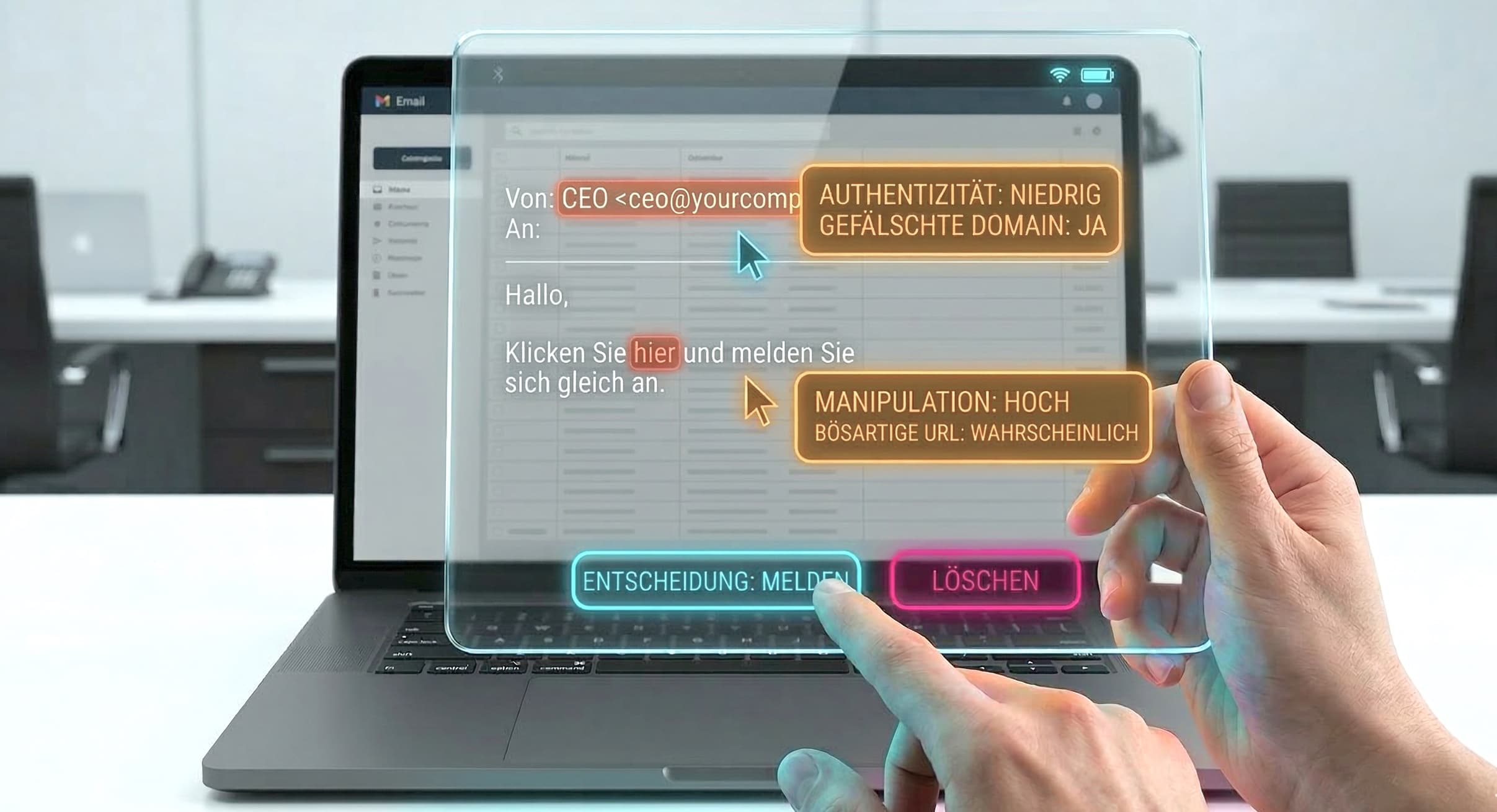
That is exactly what the Cyber Snack does. It does not work with the next tired warning slide, but with small decision situations. That is didactically smarter, because attacks in everyday work rarely look like cyberattacks. They look more like a plausible story, a harmless post, a quick click, or a completely ordinary attachment.
Four risk areas that are constantly present in everyday work
These four topics are addressed and conveyed playfully:
1. Social Engineering
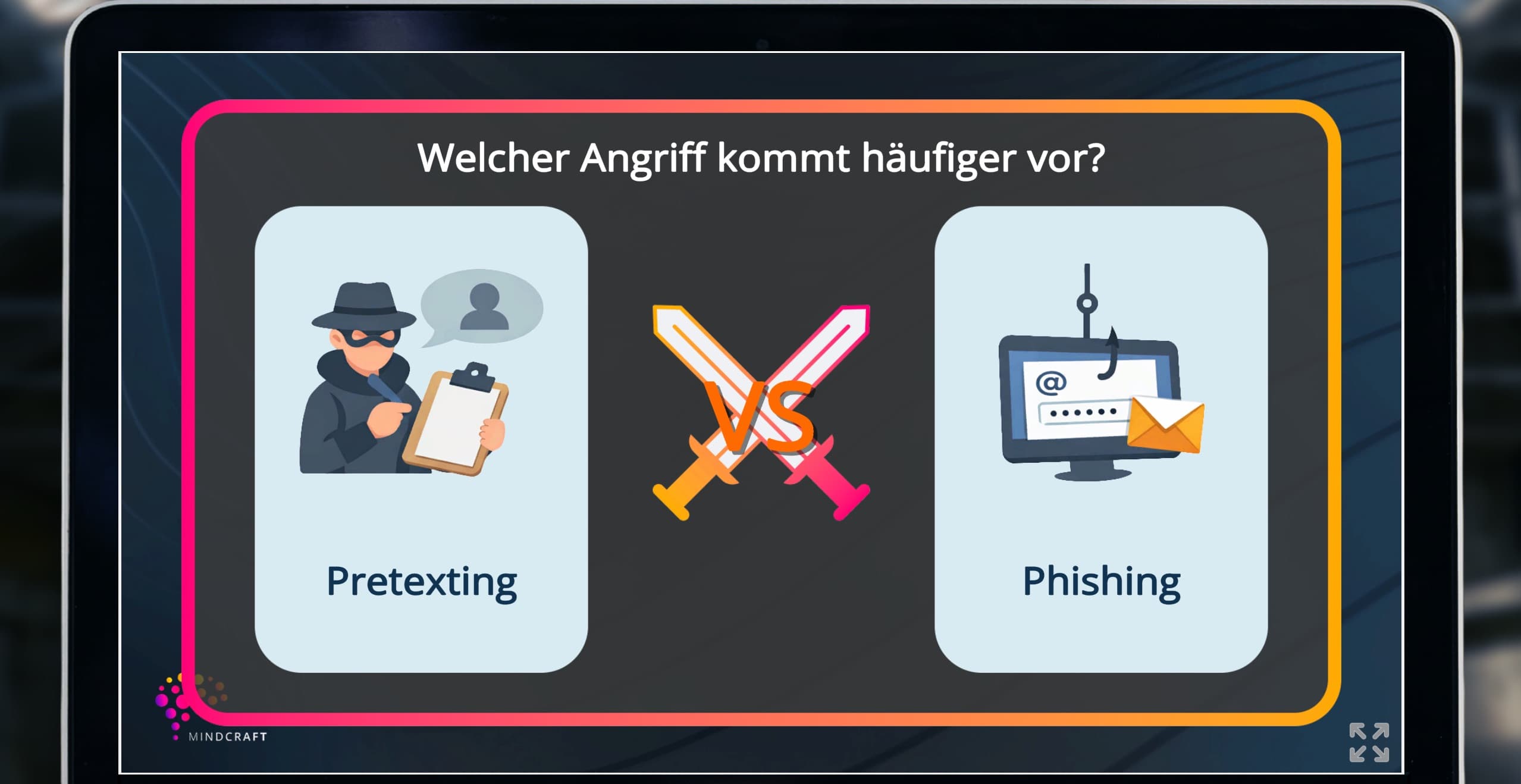
Players assess which attack methods occur more frequently in practice: phishing, pretexting, MFA bombing, tailgating, or baiting. This shifts the focus away from definitions and toward realistic risk assessment, exactly where the decisive mistakes happen later.
2. Social Media
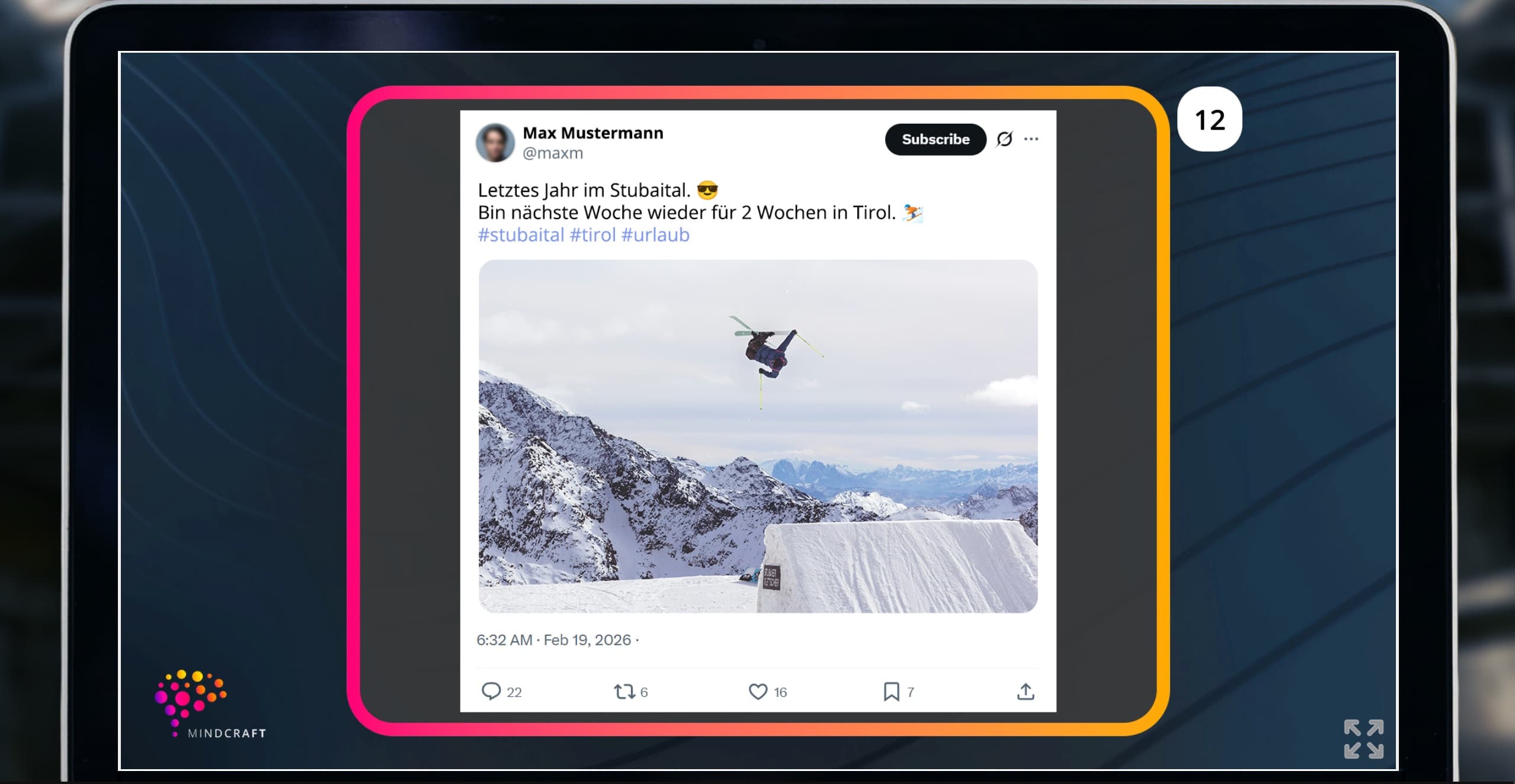
The risks are deliberately mundane: a password on a note in the background, a posted company ID card, a vacation post with clear absence information. That is precisely what makes the category strong: it shows that danger often arises not from ignorance, but from carelessness.
3. Passwords
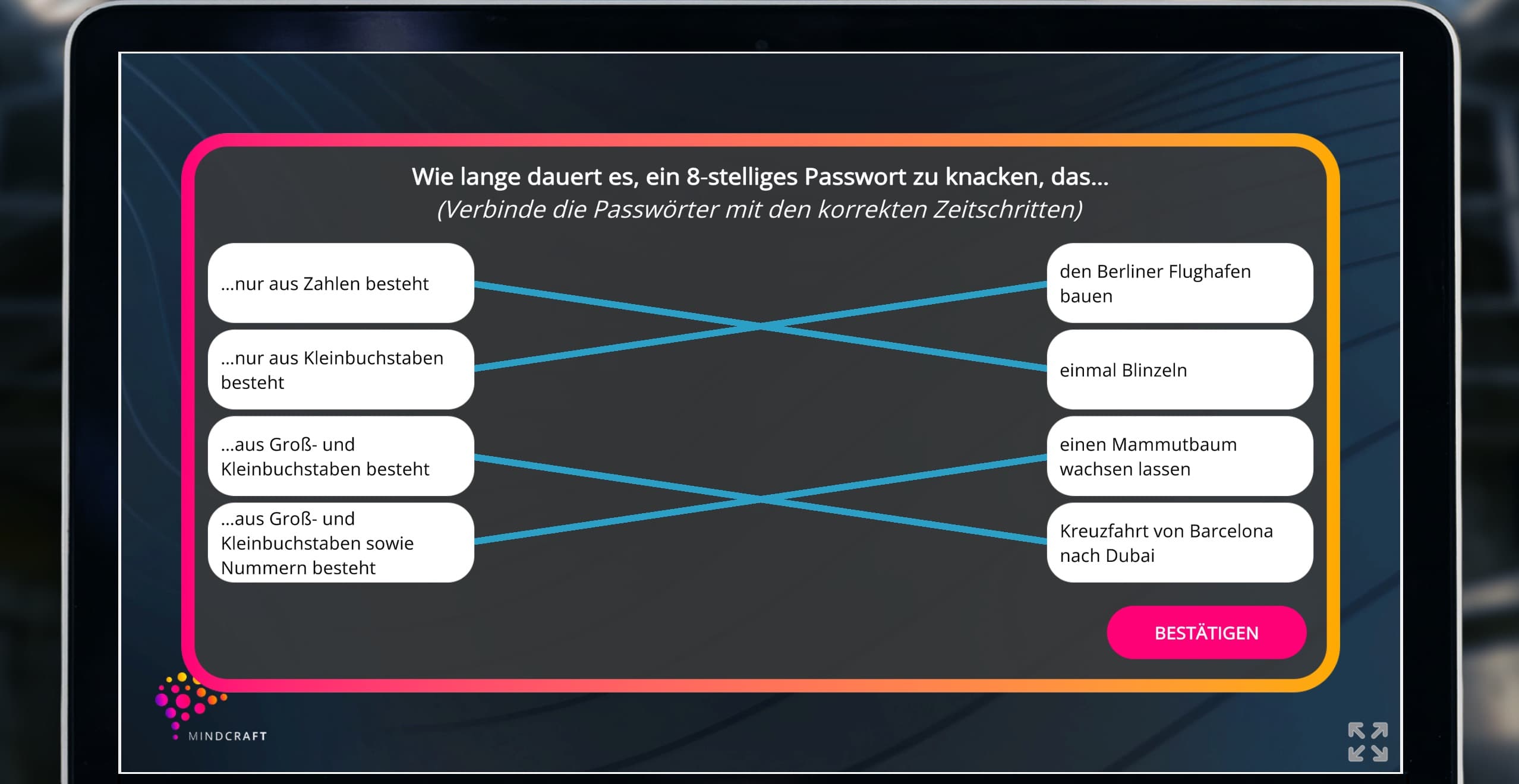
No wagging finger, but a realistic feel for password strength. Players assign different password types to an estimated cracking time, because people often understand timespans better than abstract password rules. The script deliberately works with pointed comparisons, from a blink of an eye to a giant sequoia.
4. Malware
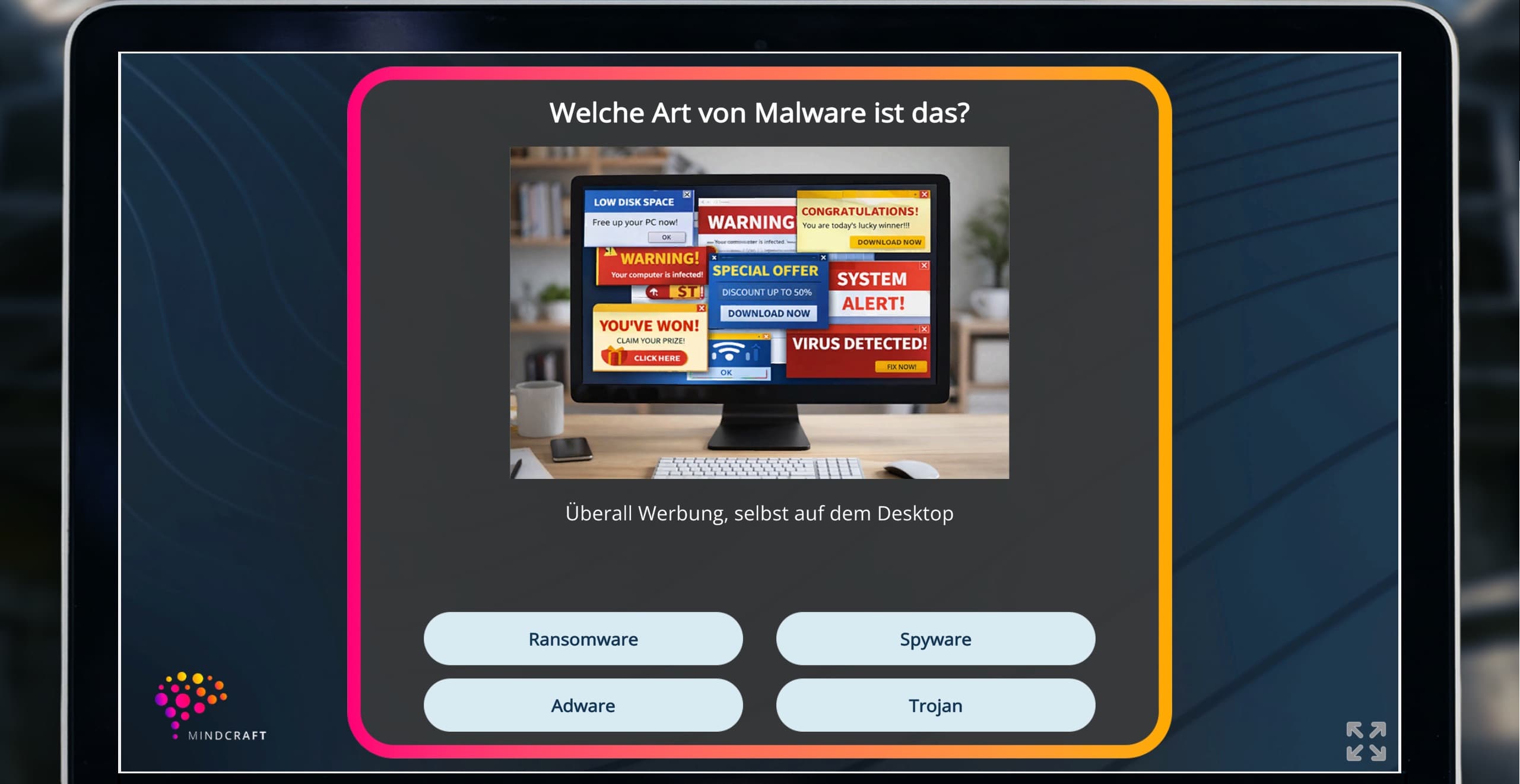
Here too, the aim is not to cram technical terms, but to recognize symptoms. Encrypted files with a ransom demand, a flood of ads on the desktop, a webcam that activates itself: players have to classify whether they are dealing with ransomware, adware, or spyware. Closer to reality than any dry definition.
What CISOs and awareness managers should take from this
The real value of this format is not that it is entertaining. Entertainment alone does not protect an organization. The value lies in the fact that entertainment serves here as a door opener for attention, and in awareness, attention is not a nice extra but the basic prerequisite.
The Cyber Snack translates abstract risks into concrete everyday situations. It makes visible that an attack sometimes looks like an attachment, sometimes like a vacation post, and sometimes like a harmless MFA request. That is exactly why a playful format can be strategically more useful than the next classic mandatory training with a raised finger.
Conclusion
When awareness is built like a game show, the topic is not trivialized; it is conveyed better. And that is what matters in the end. Not that employees can recite a definition from memory, but that they become suspicious at the right moment.